Buy White Cockatoo United States
Buy White Cockatoos in United States. They are found in the North Moluccas of the Indonesian province of Maluku. They naturally occur on the islands of Halmahera, Bacan, Ternate, Kasiruta, Tidore, and Mandioli. White cockatoos have been found on Obi Island and its satellite island of Bisa, but they are thought to have been introduced into the area as escaped populations in captivity.
habitat
White cockatoos inhabit wooded areas. They are found in forests and open woodland, mangroves, swamps, and agricultural areas, and are particularly common at the edges of clearings and rivers. They spend most of their time in the treetops. Tall secondary vegetation is thought to be their preferred habitat. They occur at elevations of 300 to 900 m.
Physical description
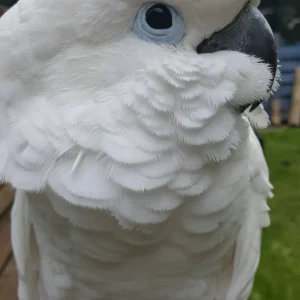
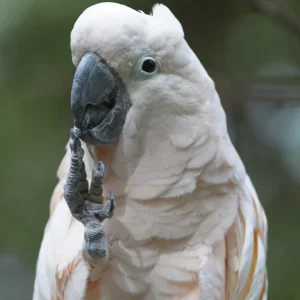
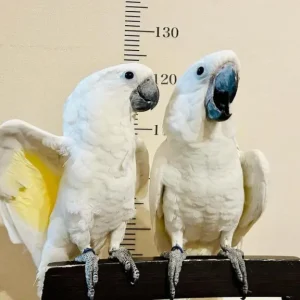
Cacatua alba is a large, white bird with dull feathers. It has a yellowish tint on the underside of its wings and tail. It is often called the “umbrella cockatoo” because of its broad, backward-curved crest. The crest is fan-shaped when standing erect. The beak and legs are dark gray. Sexual dimorphism occurs in the eye coloration of Cacatua alba. Both sexes have a light blue eye ring, but males have a dark brown iris, while females have a reddish iris. Females typically have a smaller head and beak than males.
Cacatua alba weighs 500 to 630 g and is on average 46 cm long. Its wingspan is 25 to 31 cm.
Lifespan/longevity
The Cacatua alba can live for over 40 years in captivity and 30 years in the wild. There are claims that cockatoos can live up to 100 years, although these claims have not been documented.
Behave
Cacatua alba are generally found solitarily, in pairs, and small groups, or in flocks of up to fifteen birds. In the afternoon, they gather in groups of up to fifty birds. Although they are sociable, except in mating pairs, they generally do not form close bonds. Therefore, there is no clearly defined hierarchy within the community. They are diurnal and tend to be sedentary, although some are nomadic and wander in search of food.
White cockatoos are extremely intelligent and curious birds. They can use tools, such as a branch, to scratch their backs. Captive birds require almost constant mental stimulation. They are constantly moving, climbing, and acrobatic. In captivity, birds with too little mental stimulation often become neurotic and pluck their feathers to the point of baldness.
Captive white cockatoos are known to be very affectionate towards their human companions, behaving more like a dog than a bird in this respect.
Communication and perception
Cacatua alba communicates with its partner through a variety of gestures and sounds. They also scratch each other during the mating ritual. They have also been observed tapping trees and logs with pieces of wood to alert other birds that the territory belongs to them. (Lantermann et al., 2000)
Eating habits
In the wild, C. alba feeds primarily on tree fruits. They are often observed eating papaya, durian, langsat, and rambutan. However, they have also been observed eating crickets (order Orthoptera) and skinks (family Scincidae). They also feed on corn growing in fields, sometimes causing significant damage.