Buy Monkeys United States
Buy monkeys in United States. Primates are highly intelligent, social wild animals with complex needs that cannot be met in a domestic environment. For this reason, we have long called for a ban on the purchase, sale, and keeping of primates as pets.
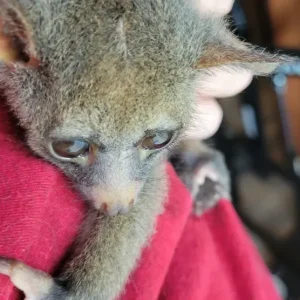
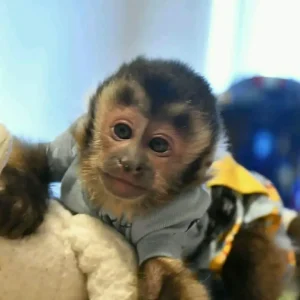
Keeping capuchin monkeys as pets
Capuchin monkeys live in trees in the forests of South and Central America. They are highly social animals and typically live in large groups of 10 to 20 in the wild. In the wild, these small monkeys eat a varied diet of fruits, leaves, nectar, nuts, buds, beetles, eggs, frogs, lizards, birds, and even shellfish.
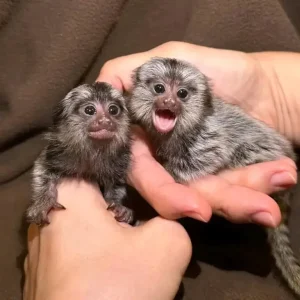
Keeping marmosets as pets
Marmosets are the most commonly kept and traded primate species in Europe. Most are common marmosets, but we also see others such as white-faced marmosets and sometimes hybrids of two species.
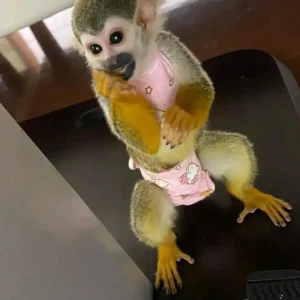
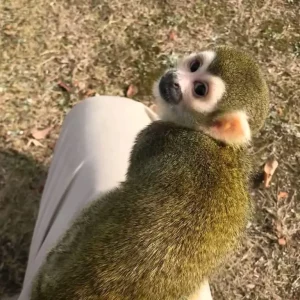
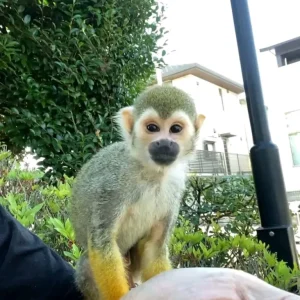
Keeping squirrel monkeys as pets
The natural habitat of squirrel monkeys is the tropical rainforests of Central and South America and the coastal forests of Brazil. They feed on various types of flowers, leaves, buds, nuts, insects, lizards, and eggs.
Squirrel monkeys are one of the smaller primate species.
Description
Because apes emerged in the primate group as sisters to Old World monkeys, characteristics that describe monkeys are generally shared by apes as well. Williams et al. outlined evolutionary characteristics, including ancestral groupings, in contrast to other primates such as tarsiers and lemuriformes.[44]
Monkeys range in size from the pygmy marmoset, which can be as little as 117 mm (4.6 in) long, has a 172 mm (6.8 in) tail, and weighs just over 100 g (0.39 lb),[45] to the male mandrill, which is almost 1 m (3.2 ft) long and weighs up to 36 kg (79 lb).[46] Some are arboreal (live in trees), while others live in the savannah. The diet of different species varies but may include: fruits, leaves, seeds, nuts, flowers, eggs, and small animals (including insects and spiders).[47]
Some characteristics are common to all groups; most New World monkeys have long tails, with the Atelidae family having prehensile tails, while Old World monkeys lack prehensile tails or have no visible tail at all.[32] Old World monkeys, like humans, have trichromatic color vision, while New World monkeys can be trichromatic, dichromatic, or—like night monkeys and galagos—monochromatic. Although both New World and Old World monkeys have forward-facing eyes like great apes, the faces of Old World and New World monkeys look very different. However, both groups share some similarities, such as the type of nose, cheeks, and rump.