Russian Blue Cat for sale in United States
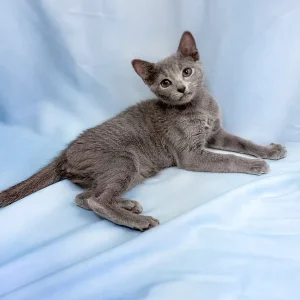
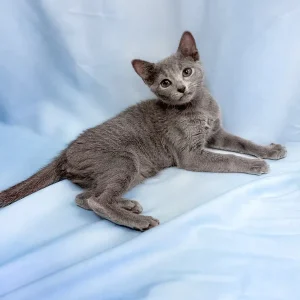
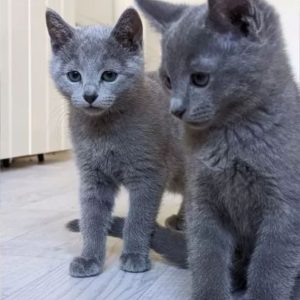
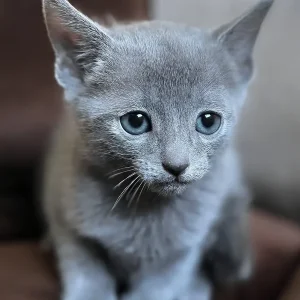
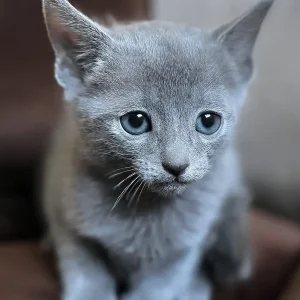
Russian Blue Cat for Sale in United States. Are you looking for a breed known for both its intelligence and beauty? Then perhaps you’re looking for a Russian Blue. This elegant, silver-gray shorthair cat is one of the most intelligent cat breeds. Its emerald-green eyes shine with intelligence, and its charming face seems to be smiling at a secret joke. Russian cats are easy to care for and uncomplicated to handle. They don’t need much space to feel comfortable. Although they may seem shy at first, they quickly develop into friendly, affectionate companions once they get to know you.
Breed history
These cats are believed to have originated in the Archangel Islands in northern Russia. Before the late 19th century, there are few written records of their history. Russian folklore recounts numerous stories of these cats as lucky charms and healers. Other stories suggest that they were the favorite pets of Russian royalty and even two English queens. It is believed that Russian Blues were brought to England by sailors. There, the cat participated in the first English cat shows. At that time, however, they were called “Archangel Cats” and competed with all other solid blue cats. From the early 20th century until World War II, Scandinavian breeders led the breed’s development. After the war, U.S. breeders began importing cats from Europe and gradually crossed the English and Scandinavian bloodlines to create the Russian Blues we know today.
Characteristics
Few other breeds can match the Russian Blue’s intelligence, and their mechanical aptitude ranks high among them. Any closed cabinet, drawer, or even sealed can or jar presents a tempting challenge for a Russian Blue; owners should never be surprised to unexpectedly find an open door, drawer, or jar. It’s advisable to distract their attention with intellectually stimulating puzzle toys and interactive games. They also make affectionate companions, seeking a spot on your lap or even riding on your shoulder around the house.
Many Russian cats are best suited to quieter environments, but they also thrive in noisy households and make friends with other animals. Typically, a Russian cat will hide under the sofa when a guest enters the house. However, their natural curiosity soon gets the better of them, and they will come out to investigate the newcomer. They are very sensitive to their owners’ moods and will try to cheer them up, or will purr gently and headbutt a crying child. They make good pets for older children who allow the cat time to become comfortable around them.
Physical characteristics
The luxurious, dense, plush coat of a Russian cat is often the first thing that catches the eye, especially when it glistens in the sunlight. The silver tips appear to glitter in the light. Run your fingers through the coat, and you’ll see that they leave small “footprints.” The intensity of the green eye color increases with age. Other characteristics include a medium-length, graceful body, a modified wedge-shaped head with a biplane profile, and large ears that are wide at the base and set wide apart. These are medium-sized cats, with males rarely weighing more than 4.5 kg and females between 2.3 and 3.6 kg.
Care
Russian Blues are clean cats that require little grooming. Combing two to three times a month helps keep shedding under control. Otherwise, all you need to do is trim the claws and clean the eyes and ears. Occasionally, the coat can become greasy or oily, and a bath is advisable. In this case, ask your breeder for product recommendations, as every coat is slightly different.
Future of the breed
This globally popular, healthy, and natural breed has no specific genetic problems. However, some believe that the relatively small gene pool may make the cats more susceptible to certain diseases. Russians also have a large appetite. If they don’t get regular exercise, they are at risk of becoming obese, which can lead to numerous other health problems. Therefore, pay close attention to your Russian’s food intake.